American Bison: The National Animal of America
If you had to guess the national animal of America, you might say bald eagle — and you'd be half right. The eagle is the national bird. The American bison holds a separate title: national mammal, made official by federal law in 2016. At up to 2,000 pounds, it's also the largest land animal on the continent, and its story runs from near-total extinction to protected icon in under 150 years.
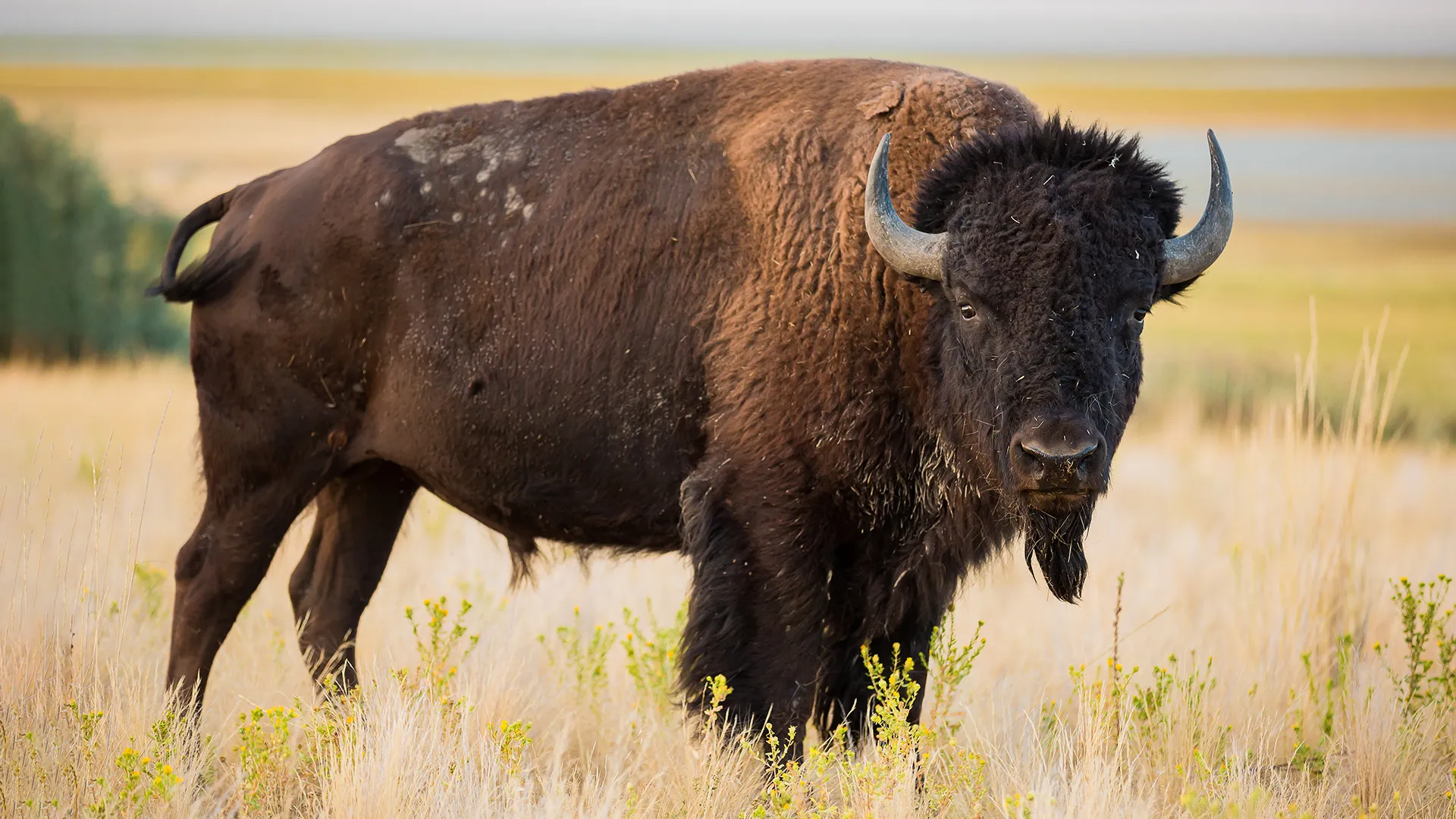
American bison — Great Plains
What Is the American Bison?
The American bison (Bison bison) is a massive, shaggy-coated grazer native to North America's grasslands and prairies. It's easy to confuse with cattle at a glance, but a few things set it apart: a pronounced hump over the front shoulders, a huge low-hung head, short curved horns on both males and females, and 14 ribs instead of the 13 that cattle have. Bulls carry a beard of dark hair about a foot long.
Two subspecies exist today — the plains bison, historically found across the Great Plains, and the wood bison, native to forested areas of Canada and Alaska. When people picture "the American buffalo," they're almost always picturing the plains bison.
How Did the Bison Become the National Animal of America?
On May 9, 2016, President Barack Obama signed the National Bison Legacy Act, making the American bison the official national mammal of the United States. It was the first time the country had designated a national mammal at all — the bald eagle had held its spot as national bird since 1782, but nothing filled the mammal category until the bison did.
The push took nearly six years and drew support from an unusual coalition: ranchers, Native American tribes, wildlife conservationists, hunters, and zoos, organized under the Vote Bison Coalition. The law itself calls out the animal's deep ties to Indigenous economic and spiritual life, and Congress framed the designation as recognition of the bison's role as a symbol of American resilience.
The first Saturday of every November is now National Bison Day, a tradition that predates the 2016 law but gained new weight once the bison became the official national mammal of America.
American Bison Size and Physical Characteristics
Bison are the largest land mammal in North America, and the numbers back that up:
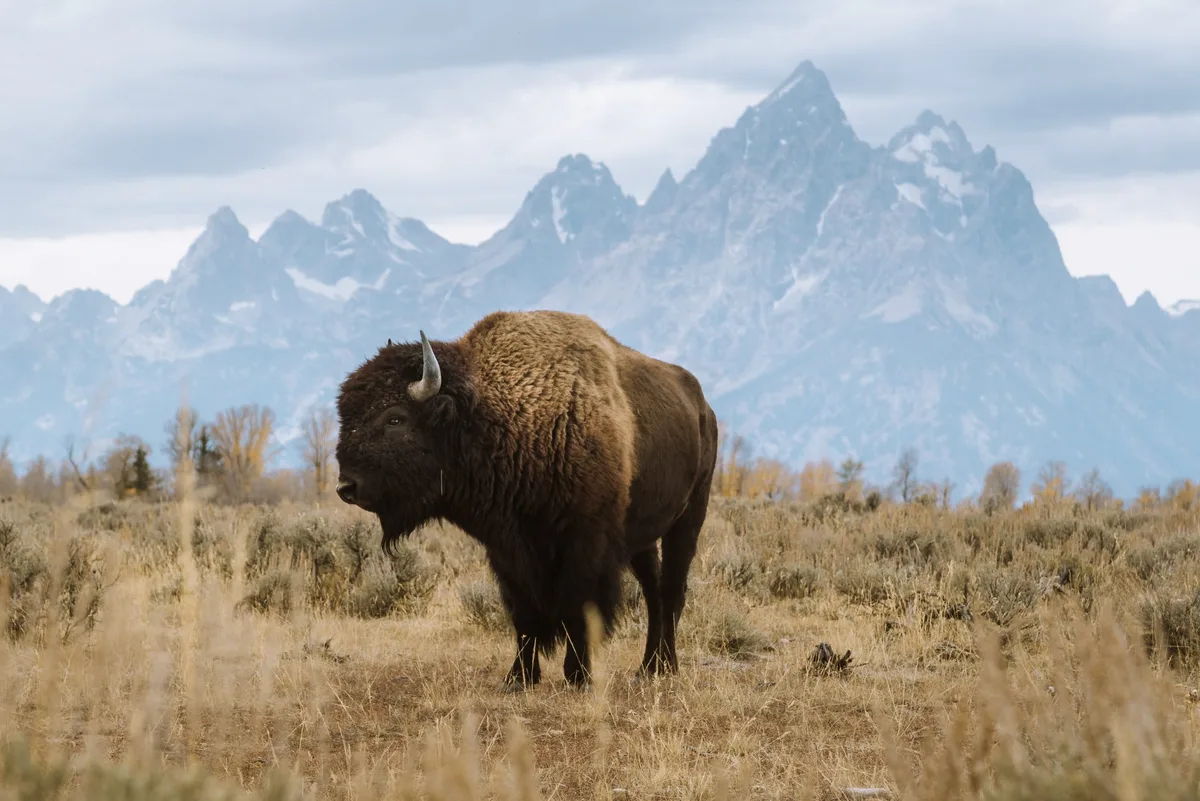
Bull bison — up to 2,000 lbs
| Trait | Bulls (males) | Cows (females) |
|---|---|---|
| Weight | Up to 2,000 lbs | Up to 1,000 lbs |
| Shoulder height | Up to 6 feet | 4–5 feet |
| Top speed | ~35 mph | ~35 mph |
| Calves at birth | 30–70 lbs | 30–70 lbs |
That combination of size and speed catches most visitors off guard. A 2,000-pound animal shouldn't be able to move like a horse, but bison can. That's exactly why the National Park Service tells visitors to stay at least 100 feet away — bison are unpredictable, and their bulk doesn't slow them down.
Bison vs. Buffalo: What's the Difference?
Short answer: in North America, "bison" and "buffalo" refer to the same animal, and both terms are correct. The word "buffalo" likely comes from boeuf, the French word for beef, and stuck after early French trappers used it for the animal they found across the plains.
True buffalo — the water buffalo of Asia and the Cape buffalo of Africa — are a different, unrelated species. So when someone calls the national animal of America a "buffalo," they're using a folk name, not a mistake. Both "American bison" and "American buffalo" point to Bison bison.
Where Do American Bison Live Today?
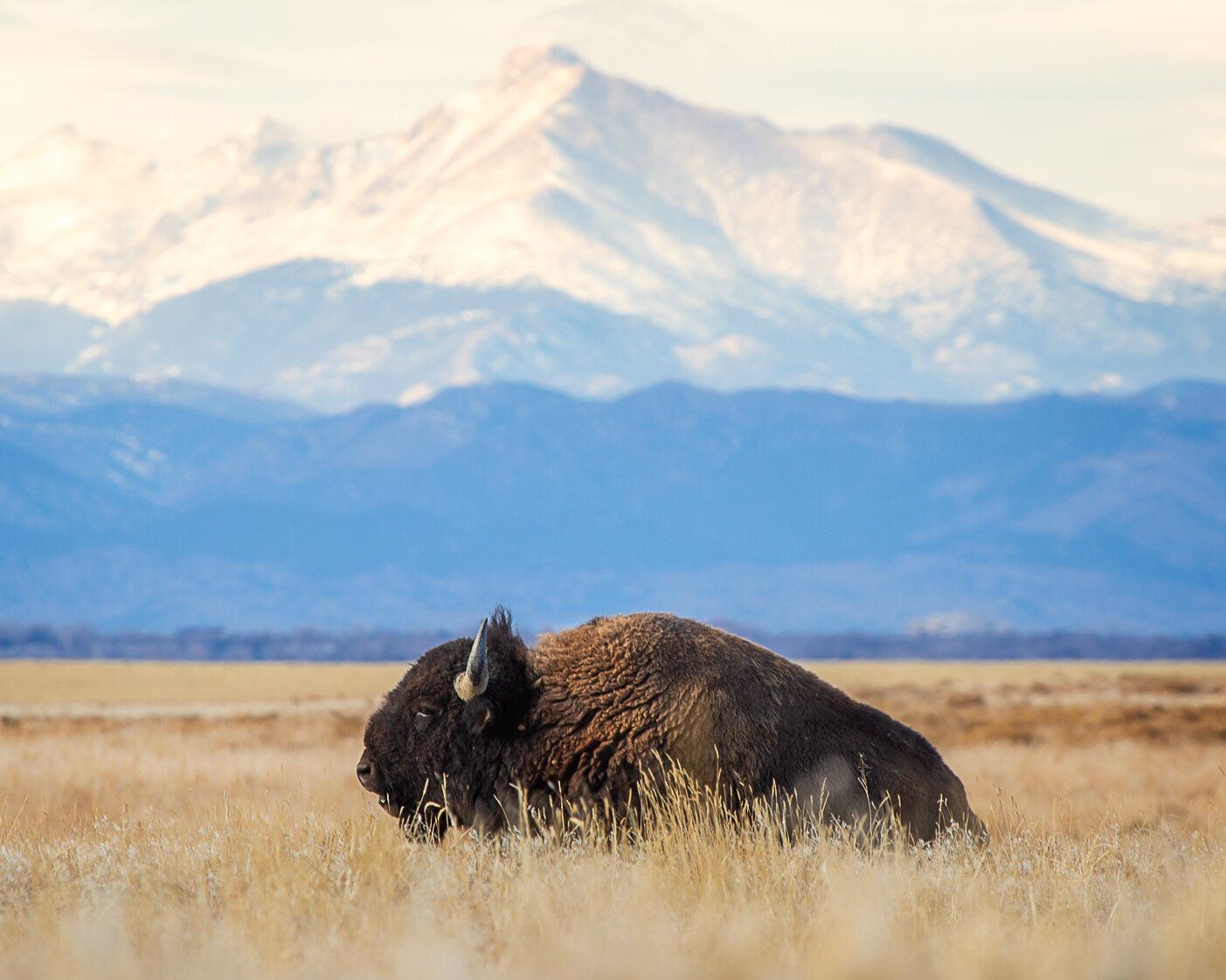
Bison in their natural habitat
Wild bison once ranged across most of the continent's interior — from Alaska's forests down through Mexico's grasslands, and from Nevada's Great Basin east into the Appalachians. Today, wild and semi-wild herds are concentrated in protected areas: national parks, state parks, tribal lands, and conservation reserves.
Yellowstone National Park holds the largest population of genetically pure, continuously wild bison in the country — around 4,900 animals descended from the handful that survived 19th-century hunting. Beyond Yellowstone, notable herds live at Wind Cave National Park in South Dakota, American Prairie in Montana, and on Nature Conservancy land like Konza Prairie in Kansas and Dunn Ranch Prairie in Missouri.
Across North America, roughly 20,000 bison live in conservation-focused herds, while several hundred thousand more are raised commercially on ranches.
Bison and Native American Culture
For Plains tribes especially, bison weren't just wildlife — they were the foundation of daily life. A single animal provided food, hides for shelter and clothing, bone for tools, and sinew for cordage. Words for bison in Indigenous languages, like tatanka in Lakota, carry meaning far beyond "large grazing animal."
That relationship makes the 19th-century collapse of bison populations especially brutal to look back on. It wasn't accidental. The U.S. government actively encouraged mass hunting of bison as a strategy to force Plains tribes onto reservations by destroying their primary food source. By the late 1880s, fewer than 1,000 bison remained in the entire country, down from tens of millions.
Today, tribal nations across the Great Plains are actively restoring bison herds on their own lands — both to rebuild grassland ecosystems and to reconnect with cultural practices that the near-extinction of the species had disrupted.
From Near Extinction to National Icon: The Bison's Comeback
The bison's recovery is one of the earliest conservation success stories in U.S. history. Naturalist George Bird Grinnell pushed for protections in Yellowstone in the 1890s, and Theodore Roosevelt — then a private citizen — lobbied Congress hard enough to get the country's first wildlife protection law passed specifically to stop bison poaching in the park. In 1905, Roosevelt helped found the American Bison Society to formalize conservation efforts nationwide.
That work paid off. From under 1,000 animals in the 1880s, bison numbers climbed back into the hundreds of thousands over the following century. The species has appeared on the U.S. nickel, the Department of the Interior's official seal since 1912, Wyoming's state flag, and the state seals of Indiana, Kansas, and North Dakota — long before Congress made the title official.
Naming the bison the national animal of America in 2016 wasn't really the beginning of its comeback story. It was recognition of one that had already been decades in the making.
Frequently Asked Questions
- Is the bison the national animal of America?
- Yes. The American bison has been the official national mammal of the United States since May 9, 2016, when President Obama signed the National Bison Legacy Act. The bald eagle remains the separate national bird.
- Why was the bison chosen as the national mammal instead of another animal?
- Congress cited the bison's size, its role shaping Great Plains ecosystems, and its deep historical and spiritual connection to Native American tribes. Its recovery from near extinction also made it a fitting symbol of American conservation.
- Is a bison the same as a buffalo?
- In everyday American usage, yes — 'bison' and 'buffalo' refer to the same animal, Bison bison. True buffalo species (water buffalo, Cape buffalo) live only in Asia and Africa and aren't related.
- How many bison are alive today?
- Estimates put the total North American bison population at several hundred thousand, split between conservation herds (roughly 20,000) and commercial ranching herds (several hundred thousand more).
- How big does an American bison get?
- Bulls can weigh up to 2,000 pounds and stand 6 feet tall at the shoulder. Cows are smaller, topping out around 1,000 pounds and 4–5 feet tall.
- Where can I see wild bison in the U.S.?
- Yellowstone National Park has the largest wild, genetically pure herd. Wind Cave National Park, American Prairie in Montana, and several Nature Conservancy preserves also maintain free-ranging or semi-wild herds open to visitors.
The Bottom Line
The American bison earned its spot as the national animal of America the hard way — through near-extinction, decades of conservation work, and a cultural legacy that predates the country itself. Whether you call it a bison or a buffalo, it's the animal that best tells the story of what the United States almost lost, and chose to bring back.
Related
© 2026 National Animal Quiz · All rights reserved